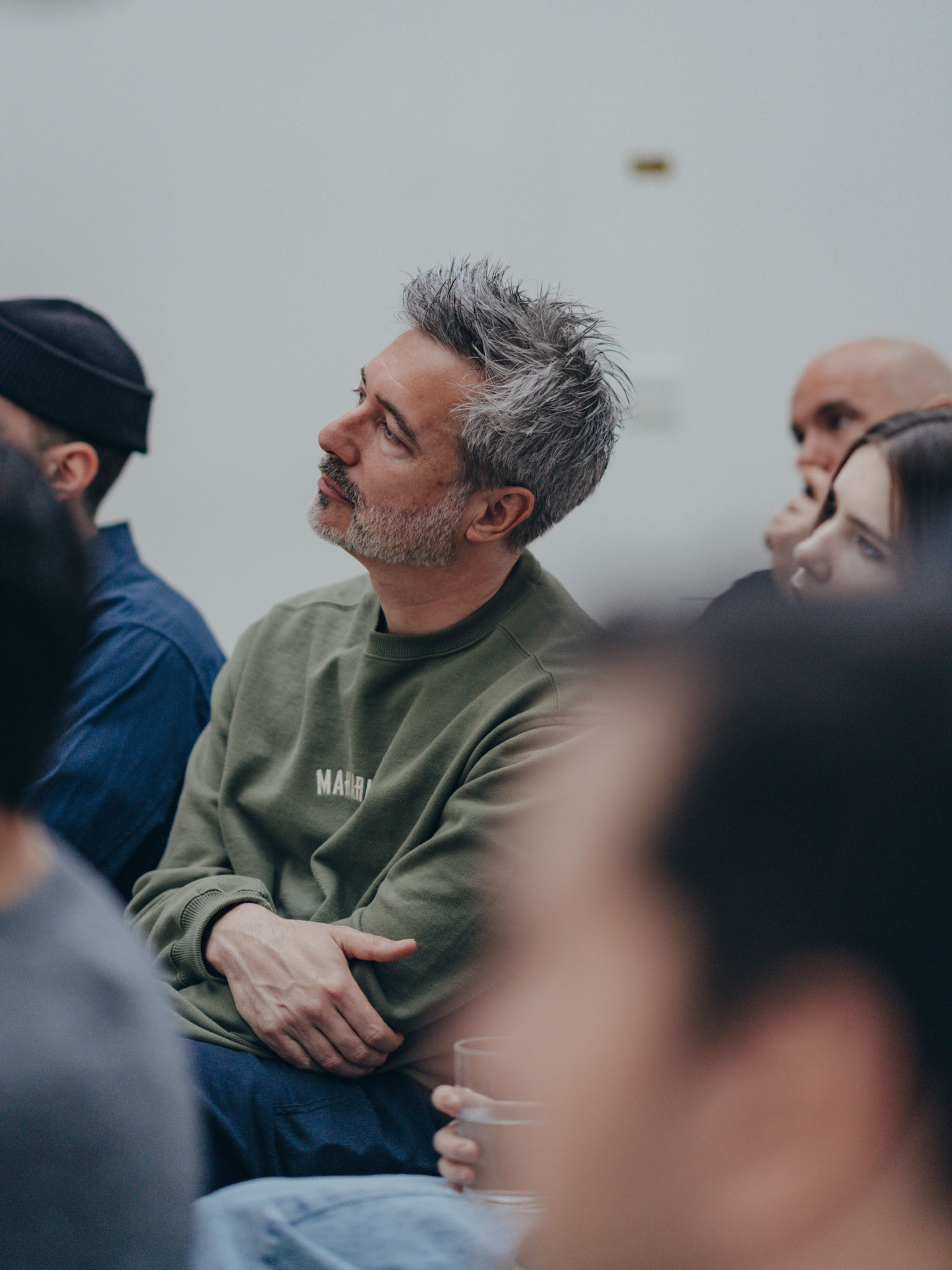




What are the implications when textile innovation becomes as intuitive as digital design? In a recent exchange with BYBORRE, an Amsterdam-based knit textile company, PHOENIX examined a production model that challenges established assumptions in the textile industry: that customisation is inherently expensive, that quality requires large-scale production, and that creativity must be limited by manufacturing complexity. Eva Emmermann, textile design expert from BYBORRE, introduced their platform, which enables designers to translate digital artwork directly into knitted textiles, moving from pixels to stitches with notable precision. Beyond the technology, the broader vision was particularly significant and aligns with PHOENIX’s approach to design: empowering creative teams with greater authorship, flexibility, and responsibility in the conception of products and materials.
Central to the platform is a digital design studio that allows users to upload artwork, define colour layers, test yarn combinations, and visualise knitted results prior to production. Instead of relying on pre-existing stock fabrics, each textile is produced on demand, either by customising an existing base design or by creating a fully bespoke pattern.
This shift is significant. In most textile workflows, custom development remains a specialised, often inaccessible process reserved for large players with high production volumes. Here, the logic is reversed: the system is built to democratise textile creation.
For designers, this approach creates a compelling intersection between CMF (colour, material, and finish) development, material innovation, and narrative expression. Fabric is no longer selected; it can be authored.
Unlike woven textiles, knitted structures provide elasticity, comfort, and adaptability to organic forms. They stretch, drape, and conform to surfaces with a softness that is both technical and tactile. These qualities make knitted textiles particularly relevant for interiors, hospitality, emerging mobility solutions, and soft architectural applications.
What makes the system even more distinctive is its approach to colour. Instead of relying on an expansive stock of pre-dyed yarns, colour is created through optical blending. By combining a limited set of yarn colours, the studio can generate a wide spectrum of visual outcomes, including subtle tonal depth and rich micro-patterns that reveal themselves only on closer inspection.
This method is not only visually compelling; it also represents a more considered approach to resource management. It results in reduced stock, minimised waste, and more intentional materials specification.
A special aspect of the presentation was its explicit commitment to responsibility. All textiles are produced on demand, thereby avoiding the surplus that often characterises the fabric industry. Minimum order quantities are comparatively low relative to conventional custom textile production, enabling greater experimentation for design teams and smaller-scale projects.
This production model offers an important lesson for the broader design industry: sustainability encompasses not only materials but also systems. It concerns how choices are structured, how production is initiated, and the extent of surplus incorporated from the outset.
For PHOENIX, this represents a familiar and significant discussion. Responsible design does not commence at the conclusion of development; it begins with the foundational framework that informs decisions from the initial concept onward.
Another significant insight was the integration of digital visualisation tools into the creative process. Designers are able to generate and download rendering assets, test multiple textile iterations, and apply them to product concepts prior to producing physical samples. Before committing to physical samples.
For design studios, early visualisation helps clients with decisions, facilitates team alignment, clarifies direction, and reduces unnecessary iterations. This trend also reflects a broader transformation in the role of digital tools within design. These tools are no longer solely instruments for presentation; they are increasingly becoming environments for material development itself.

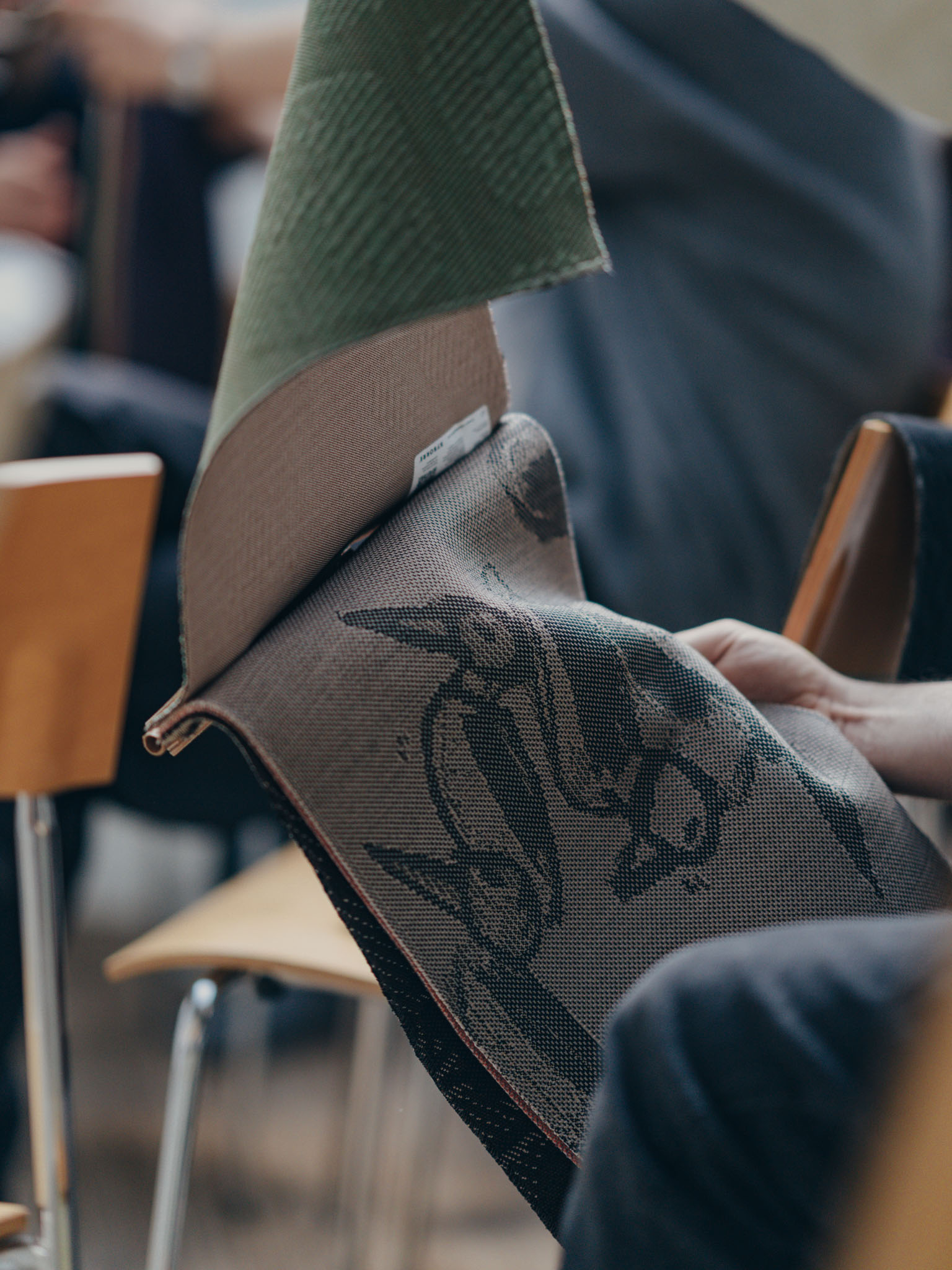

The platform does not promise instant simplicity. Working with knitted textiles requires understanding layers, colour separation, structures, durability, and construction logic. But this complexity is not a weakness. It is precisely what makes the process valuable.
Instead of reducing the design process to a generic configurator, the system encourages collaboration. Certain textile types are accessible exclusively through co-creation, ensuring that experimental three-dimensional structures maintain functionality and durability in practical applications. And BYBORRE is open to teaching and helping users achieve the best textile results.
The balance between openness and guidance is noteworthy. Innovation attains significance when it empowers users while preserving the value of expertise.
At PHOENIX, we are continuously exploring how materials, interfaces, and systems can evolve together. Custom knitted textiles represent a more integrated design future, where creative control, production logic, and environmental awareness are addressed collectively.
The opportunity extends beyond specifying improved textiles. It involves reimagining how materials can serve as active contributors to brand expression, product identity, and sustainable innovation.
As digital tools continue to transform design disciplines, the future of textiles may reside in responsibly and collaboratively creating new possibilities with clear intent. And we are happy to be part of it.