
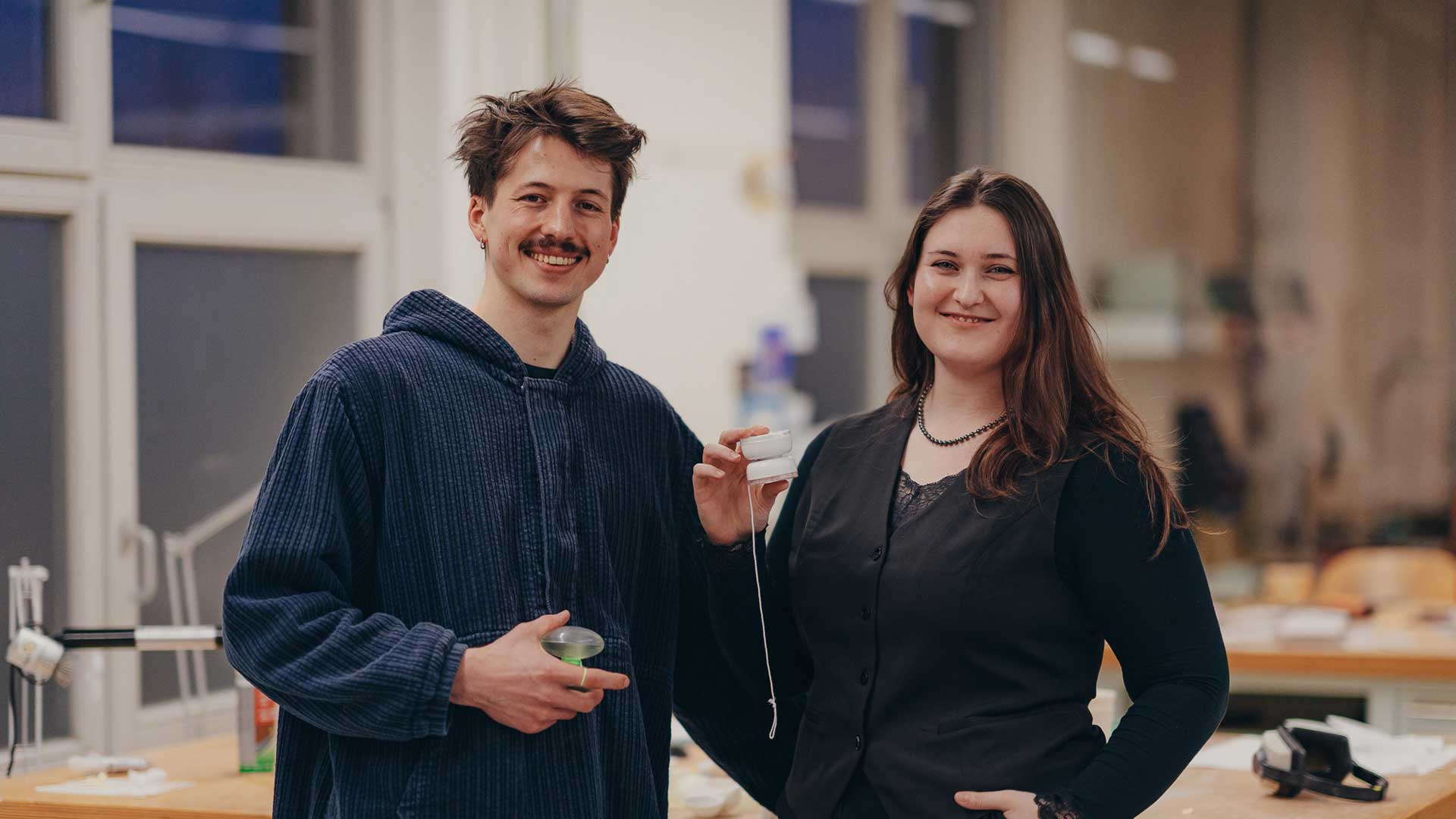
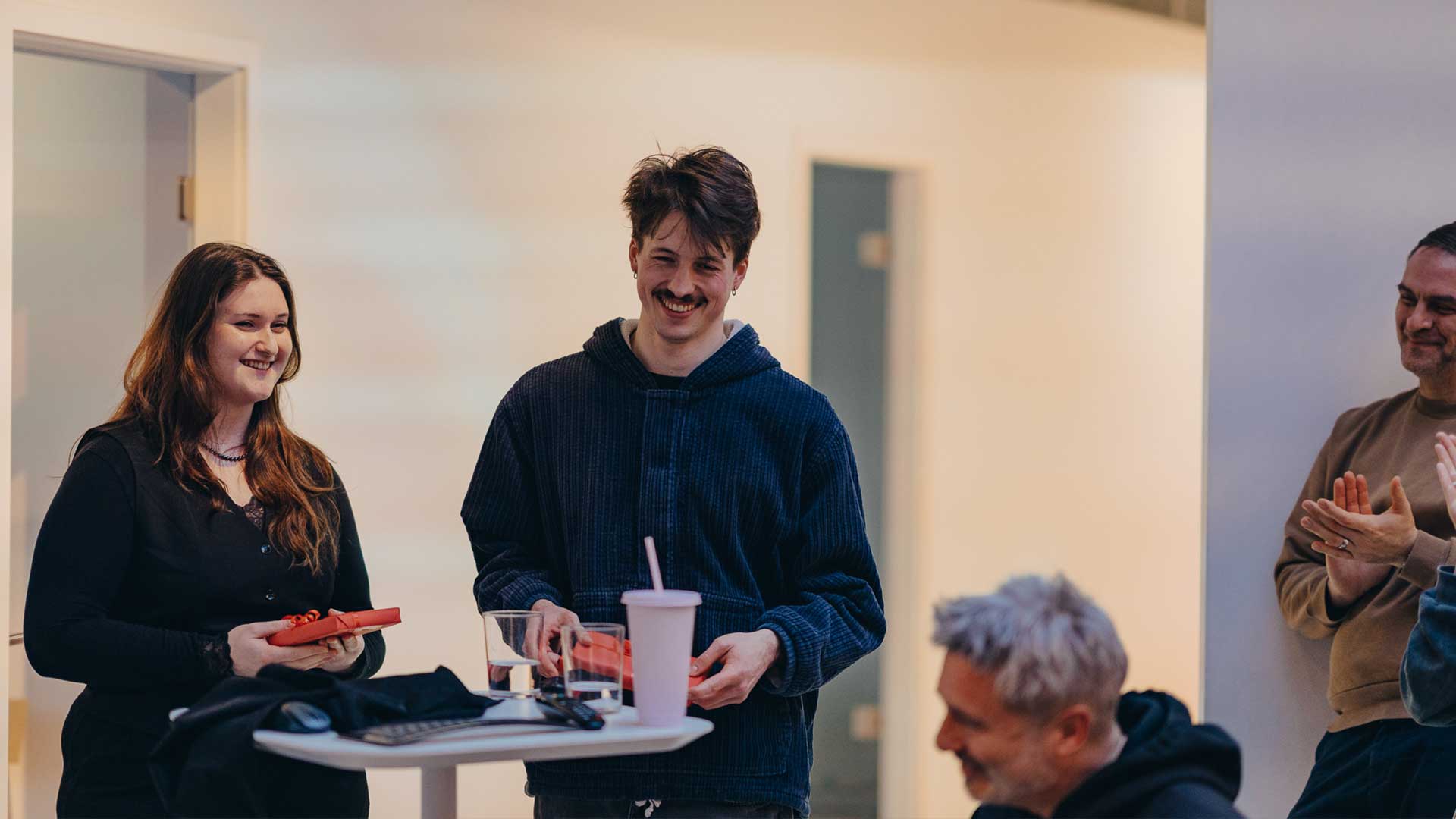


Each intern who joins PHOENIX is presented with a simple, yet open-ended, task: to design a yoyo. For more than three decades, this tradition has served as a ritual within the studio, providing an opportunity for curiosity, experimentation, and personal perspective to converge in a single object. Since 1987, generations of young designers have interpreted the Yoyo Challenge in diverse ways, transforming a playful toy into a platform for exploring materials, technology, culture, and design thinking.
The theme for this year invited interns to explore a more elusive concept: time.
Entitled “An Anthology of Time,” the challenge posed a simple question with complex implications: How can time be expressed through an How can time be expressed through anobject designed to spin, pause, and return?
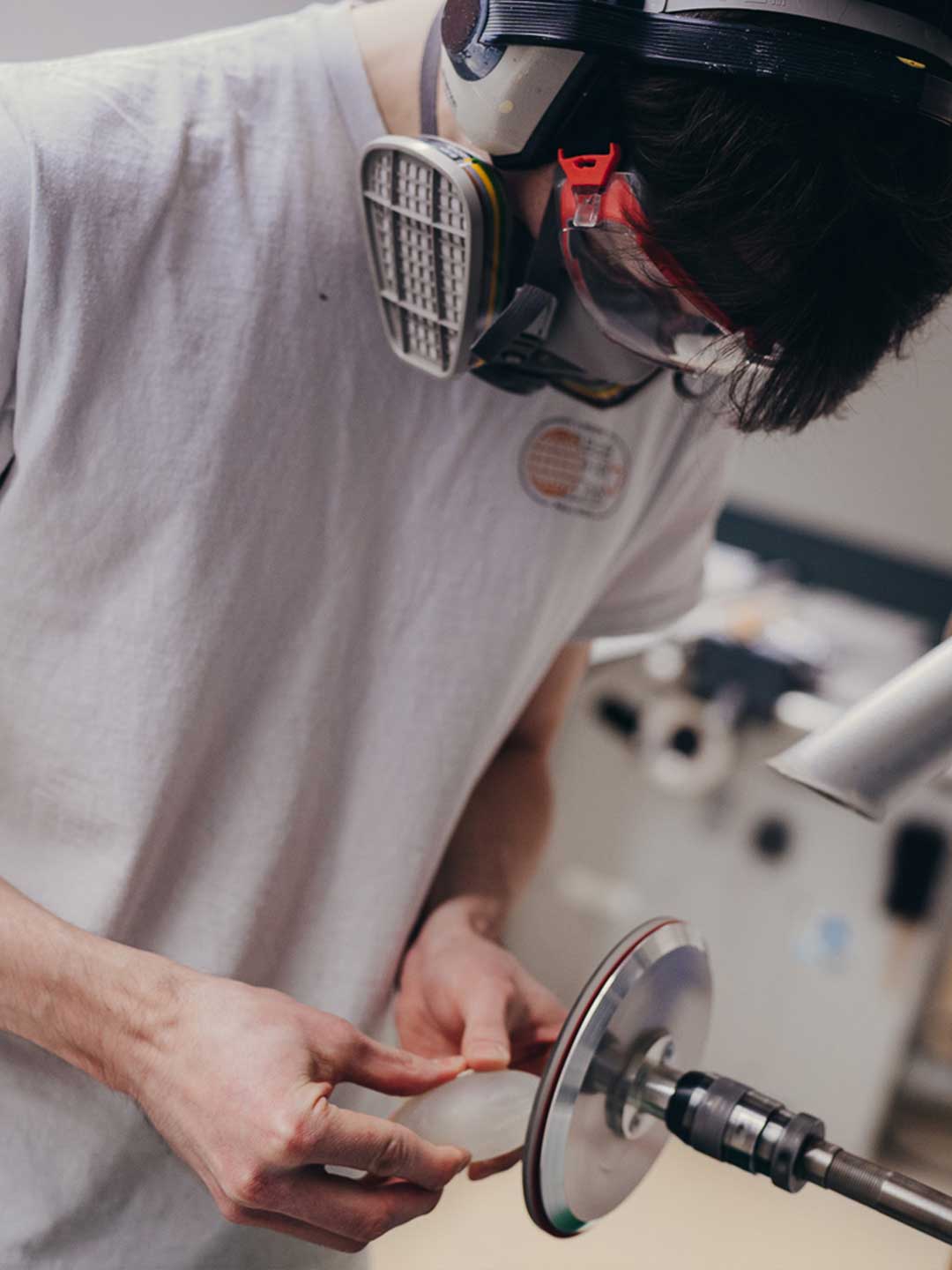
Two interns, Elias Grieninger and Marlena Mast, approached this theme from entirely different perspectives. Their yoyos reveal not only contrasting design concepts but also two distinct interpretations of time.
Elias addressed the challenge by examining the relationship between physics, motion, and human perception.
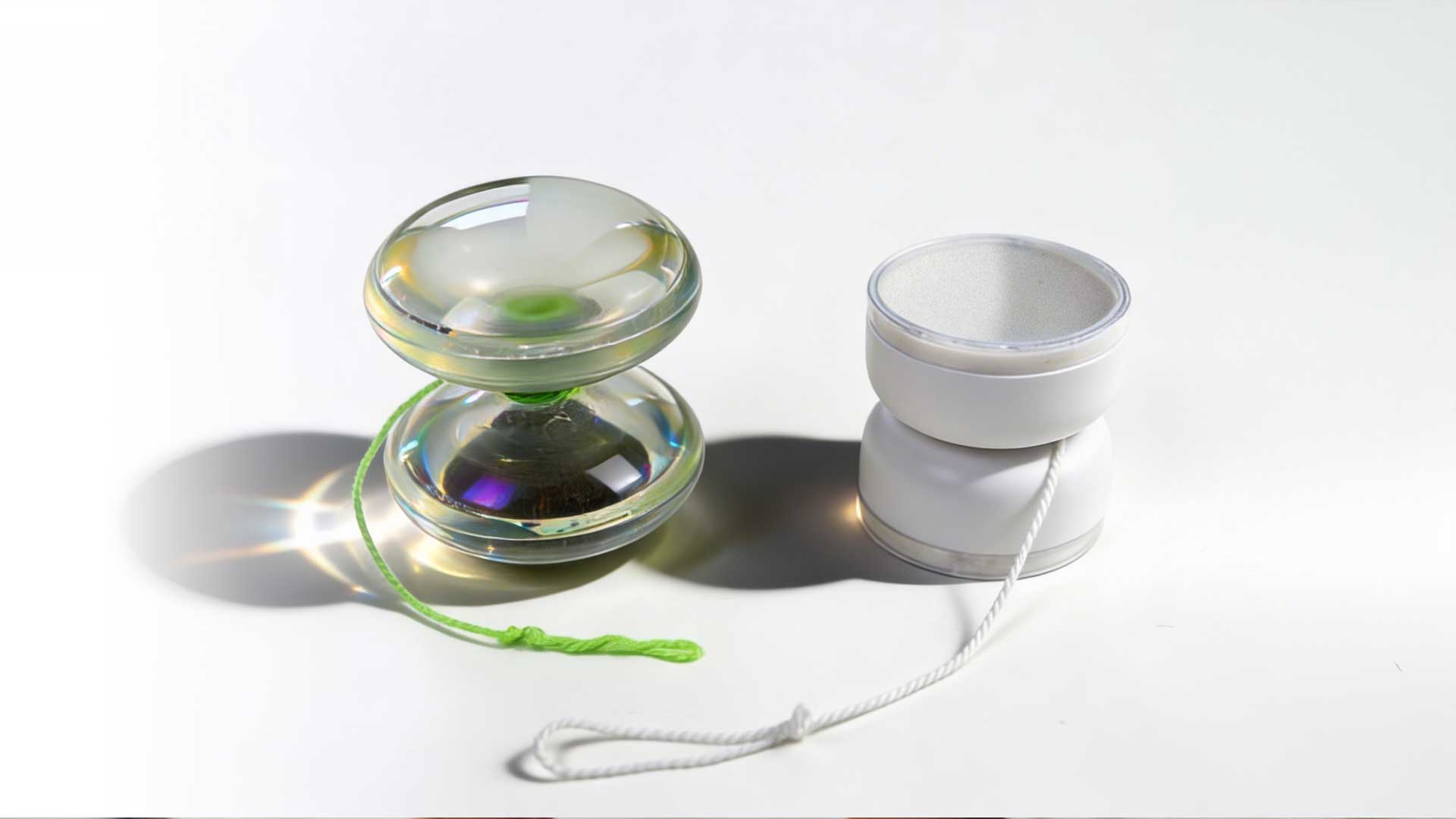
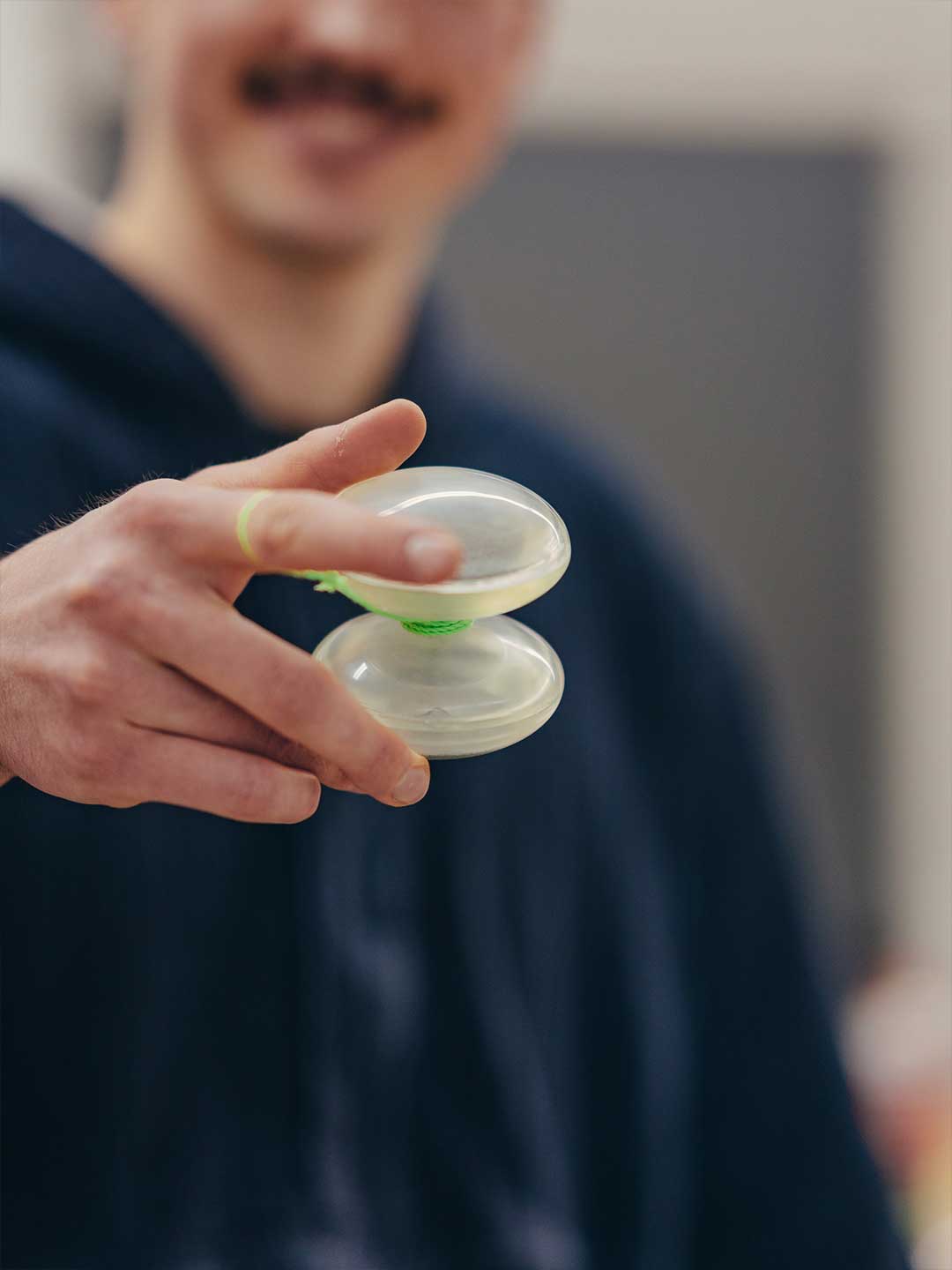
His concept combines two familiar objects: a yoyo and an hourglass. The form references scientific ideas about time as an element within a broader system of space, matter, and gravity. The hourglass silhouette suggests the curvature of spacetime, while small spheres inside the transparent bodies symbolise matter moving through a gravitational field.
The result is a design that visualises Balance.
The most intriguing aspect of Elias’ concept lies in the interaction. He designed a yoyo in the hourglass format, replacing sand with small, identical spheres. Before the yoyo can be used, the user must wait. Only when approximately half of the spheres have fallen through the hourglass does the weight distribution become balanced enough for smooth operation.
The user must observe the object and identify the appropriate moment to begin, serving as a metaphor for timing, balance, and awareness.
Once the yoyo begins spinning, the experience shifts. During play, attention centres on rhythm and movement, and the perception of time diminishes. The object transitions from measuring time to dissolving it.
Elias’ design explores a series of contrasts
Through this layered interaction, the yoyo serves as a reflection on how individuals observe, measure, and ultimately lose track of time.
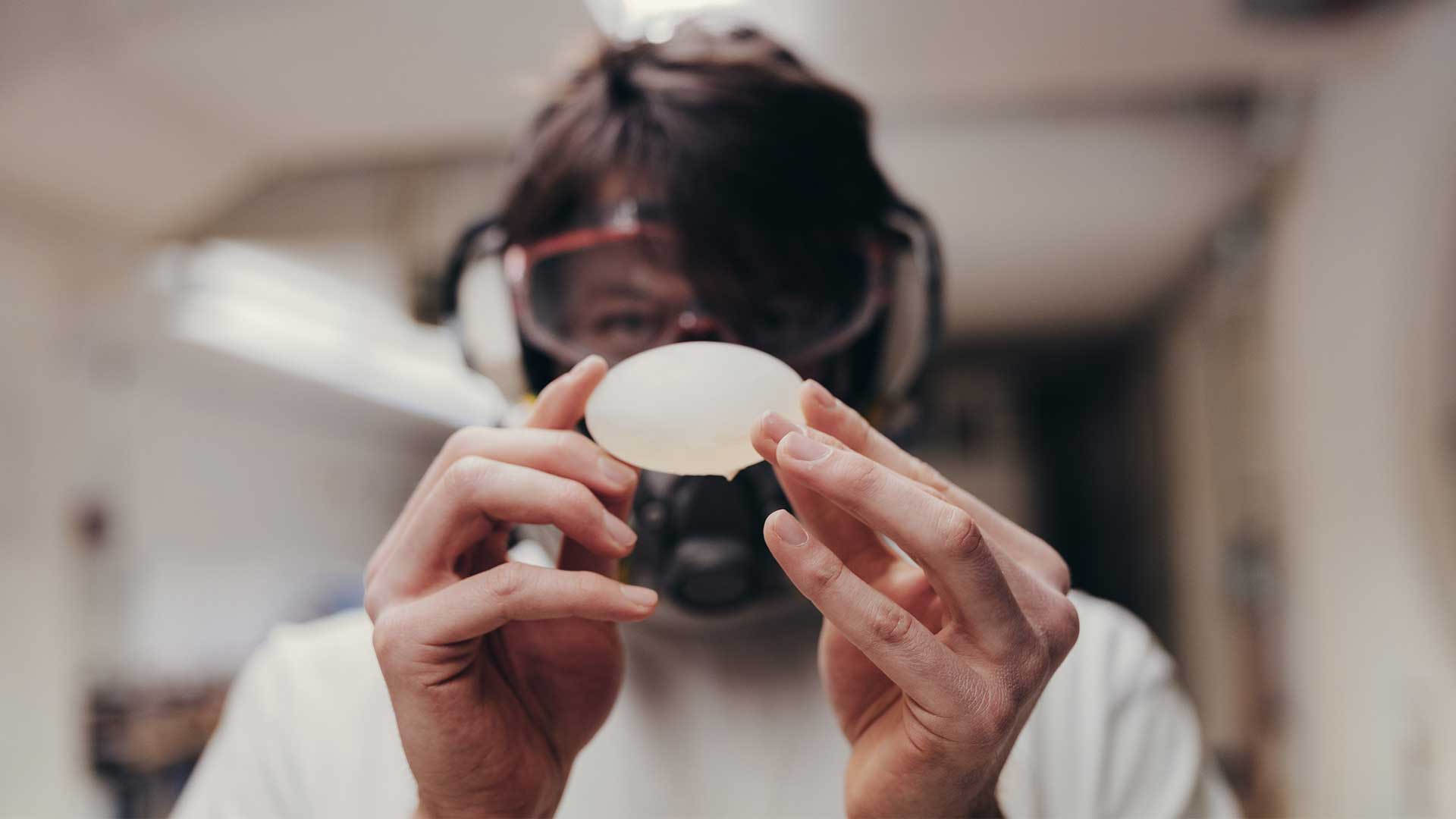
While Elias focuses on physics and balance, Mara approaches time through the concept of transformation.
Her concept begins with a simple statement: “Time equals change. And change is motion.”
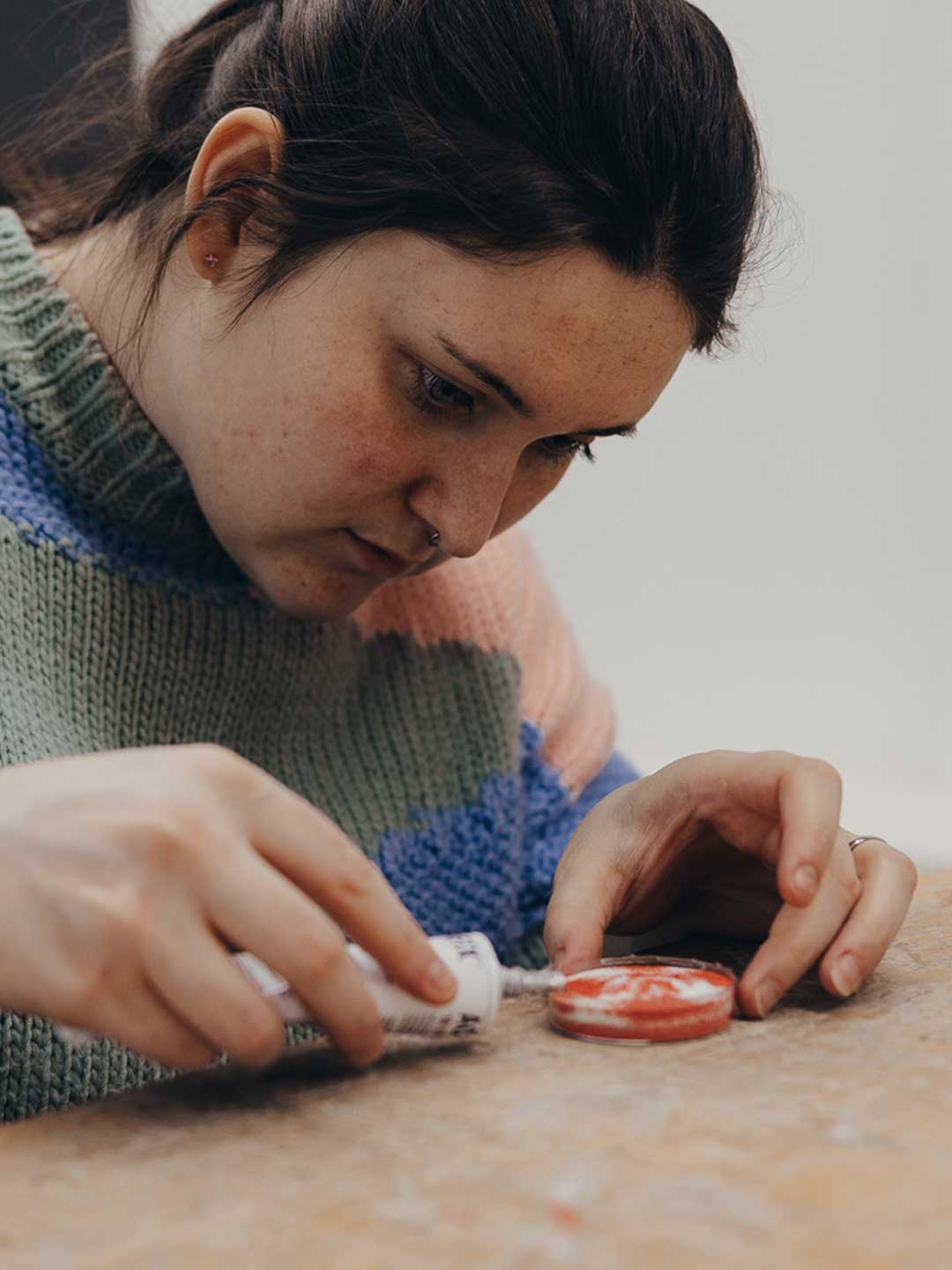
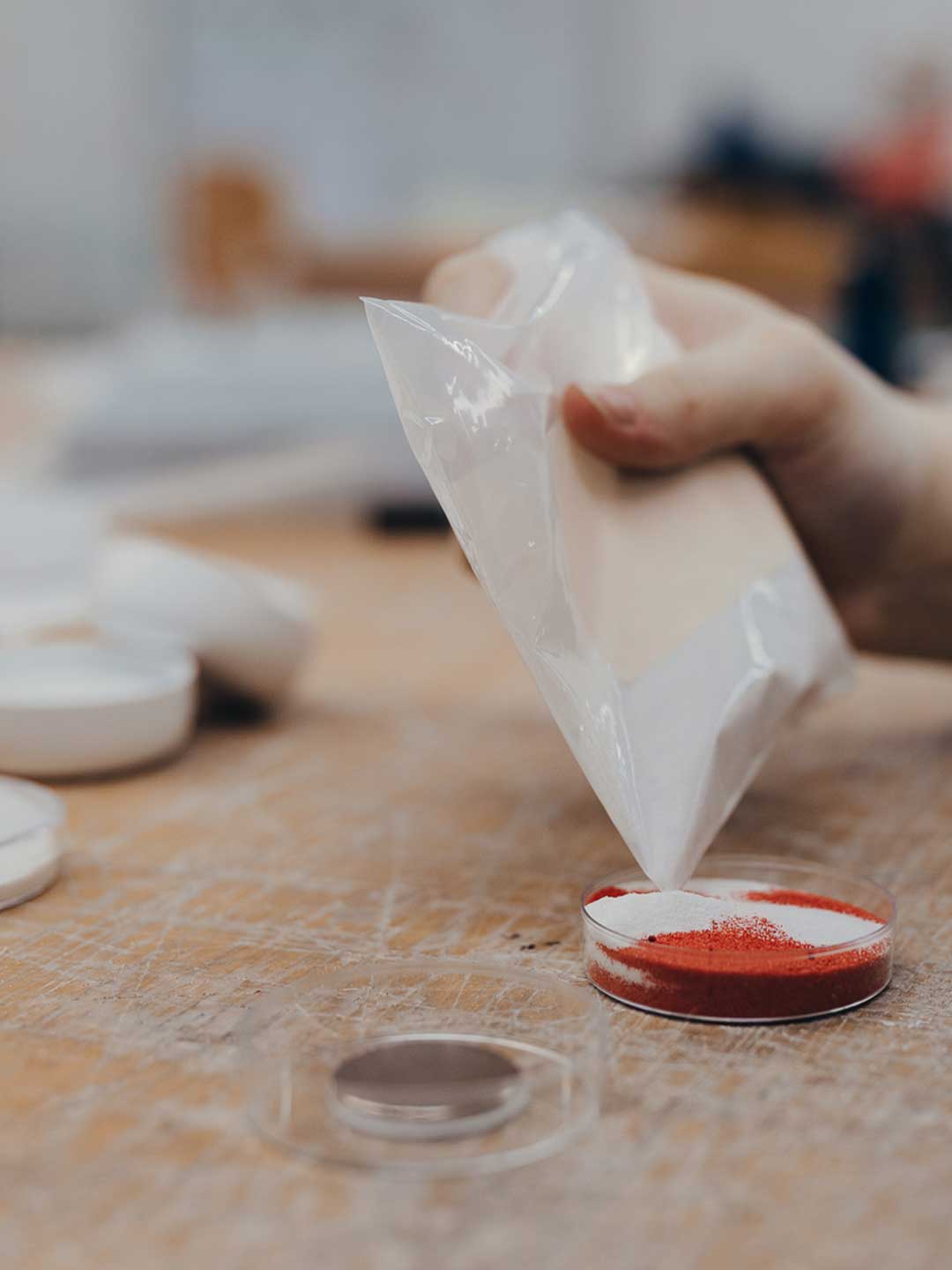
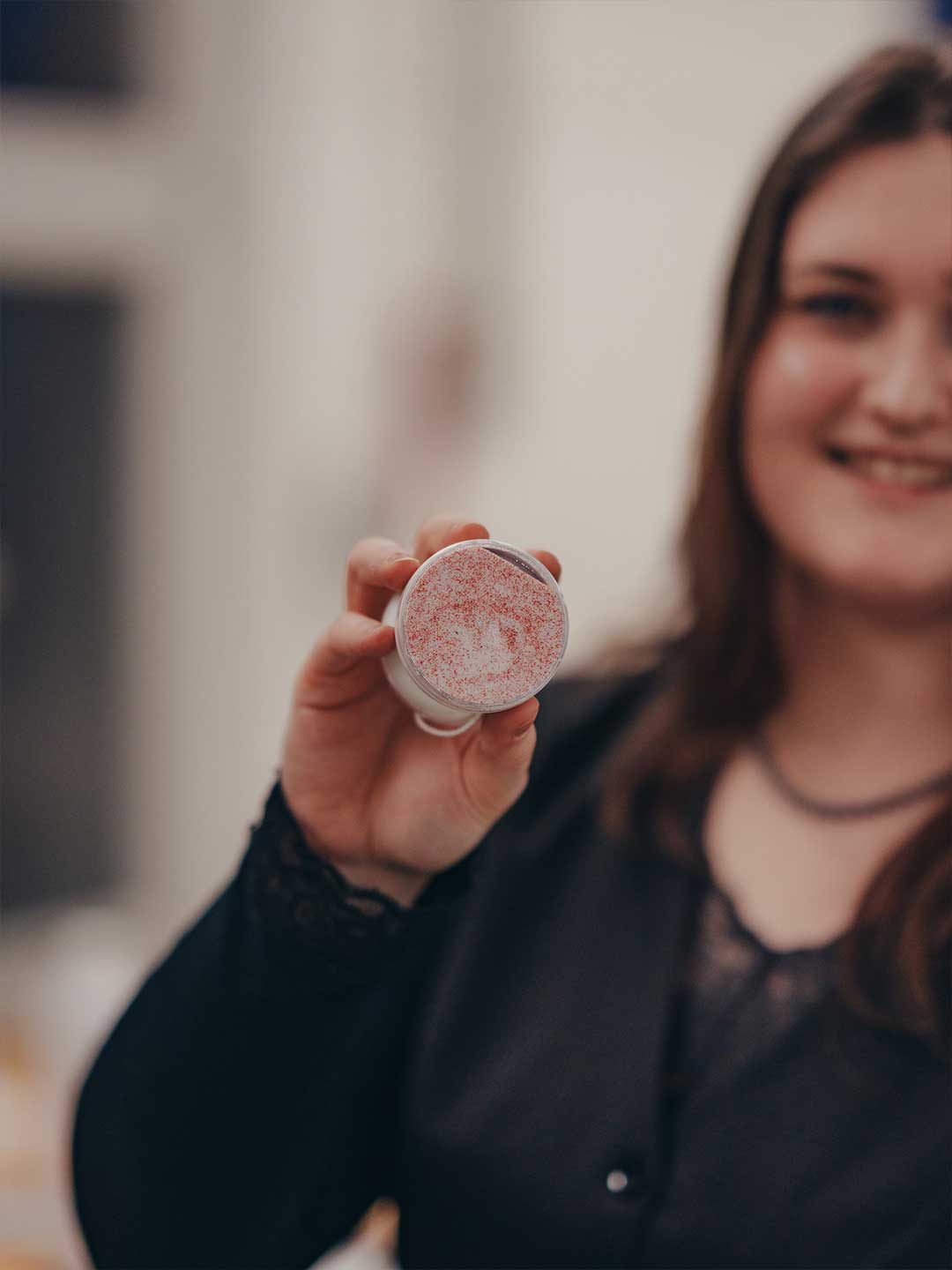
At first glance, her yoyo resembles a delicate hourglass form filled with what appears to be fine white sand encased in glass. This white material represents time in its most intangible form: invisible, untouchable, and often unnoticed.
The underlying concept becomes apparent only through play. As the yoyo spins, movement gradually reveals a second layer beneath: red sand.
What initially appears uniform begins to transform. The white fades, the red reemerges, and the object visibly changes as it moves. For Mara, this transformation represents the passage of time. While each person experiences time differently, one universal truth remains: time cannot move backwards. Once the sand is mixed, you cannot separate it.
The yoyo embodies this idea through its physical transformation, a process that unfolds exclusively through motion.
In Mara's interpretation, the “Anthology of Time” is contained within the object itself. The yoyo encompasses several timeliness simultaneously:
As with many playful experiences, time appears to pass more quickly when one is fully immersed.
In this way, Mara's yoyo demonstrates that time is deeply personal, much like the unique creation formed by the sand.

The Yoyo Challenge, led by Sven Feustel at PHOENIX, has consistently been more than a design exercise. It serves as a means of observing how new designers interpret the world. Over the years, hundreds of interns have participated in this challenge, each contributing fresh ideas, materials, and narratives to the studio.
What remains constant is the freedom to experiment and the recognition that even the simplest object can inspire unexpected ideas. This year’s theme, “An Anthology of Time,” demonstrated that time comprises a collection of perspectives, experiences, and moments.
Sometimes, exploring these concepts requires only a small object spinning on a string.
